
 The other day I noted the 100th anniversary of the discovery of poliovirus. In the event that you were wondering what was the first virus identified, here is a list of early virus discoveries. Remember, these viruses were certainly around long before humans found them.
1892 – Dimitrii Ivanovsky observed that agent of tobacco mosaic disease passes through porcelain filters that retain bacteria
1898 – Marcus Beijerinck makes the same observation; concludes that the pathogen must be a distinctive agent
1898 – Friedrich Loeffler and Paul Frosch (former students of Koch), find that causative agent of foot-and-mouth disease is filterable (the first animal virus)
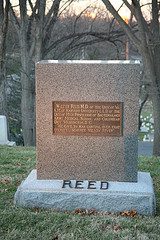
1901 – Yellow fever virus – Walter Reed (the first human virus)
1903 – Rabies virus (Remlinger, Riffat-Bay)
1906 – Variola virus (Negri)
1908 – Poliovirus (Karl Landsteiner and E. Popper); chicken leukemia virus (Ellerman, Bang)
1911 – Rous sarcoma virus (Peyton Rous)
1915 – Bacteriophages -Frederik Twort, Felix D’Herelle
1931 – Swine influenza virus (Shope)
1933 – Human influenza virus (Smith)
The name virus was coined from the Latin word meaning slimy liquid or poison. It was originally used to described any infectious agent, including the agent of tobacco mosaic disease, tobacco mosaic virus. In the early years of discovery, viruses were referred to as filterable agents. Only later was the term virus restricted to filterable agents that require a living host for propagation.
I have a cold at the moment so I hate viruses (and mucus).
Sorry about that….but it's that time of year…do you think it's rhinovirus, adenovirus, paramyxovirus, or coronavirus?
Have a great holiday.
Vincent
I have just learned about this blog, and am already enjoying it. Thanks!
But I am surprised to see any info about variola virus and vaccinia virus missing from this list!
Before the distinction of filterable and non-filterable agents, poxvirus particles were seen as “inclusion bodies” in infected cells under the light microscope in 1886 by John Buist, who saw vaccinia particles in vaccine material, and in 1892 by Guiseppe Guarnieri, who saw variola particles in human cells infected with smallpox(1). These two agents of disease were called “variola virus” and “vaccine virus” in the first decade of the 20th century, although the definition of what constituted a virus was loose and debated by researchers at that time. They were known to be filterable agents of disease, and vaccine material was treated with bactericidal preparations at least before 1918, when a new method of bactericidal preparation was being investigated (2).
1. Waterson A.P. and Wilkinson L. An introduction to the history of virology. (Cambridge, 1978)
2. Tyler CR, Krumwiede C. The danger of decolorizing vaccine virus. Am J Public Health (N Y). 1925 Apr;15(4):303-4.PMID: 18011486
Other interesting references on early virus research (van Helvoort) and early smallpox research (Gordon):
van Helvoort T. History of virus research in the twentieth century: the problem of conceptual continuity. Hist Sci. 1994 Jun;32(2):185-235. PMID: 11639267
Gordon, M. H. Studies of the Viruses of Vaccinia and Variola. Med. Res. Council, Spec. Rep. No. 98
Thanks so much for your comments. I'm glad you like the blog, but it is certainly improved by reader participation like yours. That's the way the social web works.
I would be happy to include poxvirus in the list of discoveries on this post. I haven't come across this history in any of my readings so I depend on your recommendations. Based on your comments, I would put 1918 as the year for poxvirus – but please let me know your thoughts. I don't have any of the publications you refer to.
Based on MaryROdom's comment, I looked into the discovery of poxviruses and found a 1904 reference that is probably the latest year for discovery. Therefore I have inserted vaccinia virus into the list above at this year. The reference is: Magrath, GB and Brinckerhoff, WR. 1904. On the occurrence of Cytorcytes variolae, Guarnieri, in the skin of the monkey inoculated with variola virus. J. Med. Res. 11:173-179. If anyone has an earlier date, please let me know and I'll post it.
Based on the article “Smallpox and its eradication” (Fenner et al, WHO, 1988) I have included Negri (1906) on this list for demonstrating infectivity of poxvirus after filtration to remove bacteria. According to the article, “Negri (1906) had shown that the infectivity of vaccine lymph would remain after the lymph had been passed through a filter that held back bacteria…”. The reference for this statement is Negri, A. (1906) Uber Filtration des Vaccinevirus. Zeitschri/l fur Hygiene und Infektionskrankheiten, 54: 327-346.
Ah, great, thanks for looking into it, and thanks for the references. I am always happy to see my “pet” virus family given credit with regard to the important roles it has played in the developement of our knowledge of infectious agents, viruses and immune response.
By the way, the van Helvoort article is availble here:
http://adsabs.harvard.edu/abs/1994HisSc..32..185V
Cheers!
Thanks very much for the link to the Helvoort article.
Rich Condit sent me a link to a terrific WHO article on smallpox
eradication. In case you haven't seen it, here is the link:
http://whqlibdoc.who.int/smallpox/9241561106.pdf
Vincent
Ah, great, thanks for looking into it, and thanks for the references. I am always happy to see my “pet” virus family given credit with regard to the important roles it has played in the developement of our knowledge of infectious agents, viruses and immune response.
By the way, the van Helvoort article is availble here:
http://adsabs.harvard.edu/abs/1994HisSc..32..185V
Cheers!
Thanks very much for the link to the Helvoort article.
Rich Condit sent me a link to a terrific WHO article on smallpox
eradication. In case you haven't seen it, here is the link:
http://whqlibdoc.who.int/smallpox/9241561106.pdf
Vincent
who discovered west nile virus
Pingback: DARPA thinks it has a solution to Ebola (and all other infectious diseases) -- Fusion
Pingback: DARPA Thinks It Has Discovered a Radical Solution to Prevent Mass Outbreaks of All Infectious Diseases, Including Ebola (Fusion) | Interesting News in Health and Disease
dear madam need some lectures about modern virology please
Pingback: Как долго разрабатываютÑÑ Ð²Ð°ÐºÑ†Ð¸Ð½Ñ‹ | Социальный КомпаÑ